About us

A company that started in somebody's living room and never really left.

We build recovery technology for the home, because that is where recovery happens. We learned that one house at a time, not from a market study.

The story runs straight down this page

Eleven years old

Somebody had to be the one in the room

Michael Bankowski started caregiving at eleven, looking after his grandmother on his mother’s side. His mother was a nurse, so he was taught properly, which is more than most people in that position get.

Rosalynn Carter said there are only four kinds of people in the world: those who have been caregivers, those who are caregivers now, those who will be, and those who will need one. That covers a boy of eleven, and it covers whoever is reading this.
Then, for over a decade

A home care agency, and 10,000 hours of his own

He went on to own and run a home care agency for more than ten years, and put in over 10,000 hours of hands-on caregiving himself. That is a lot of time in other people's kitchens and back bedrooms.

You learn things there that never reach a discharge summary: what a folded sheet of exercises is worth by the third week, which families are close to coming apart, and how little it would have taken to prevent it.

What ten years in other people's houses teaches you

None of this is a technology problem first. It is a Tuesday afternoon problem.

  • Recovery is won or lost at home, often at two in the morning, with nobody keeping score.
  • It can be done there. Home-based stroke rehabilitation can match center-based programs for daily-living independence.
  • Yet a person comes home after a stroke with a sheet of exercises and a phone number.
  • And the person who has to make it work is usually unpaid, untrained, and rarely asked how they are holding up.

On home-based rehabilitation matching center-based programs: systematic review and meta-analysis, Physical Therapy, 2025, PMID 40167208.

April 2021

US Patent 10,966,897 B2

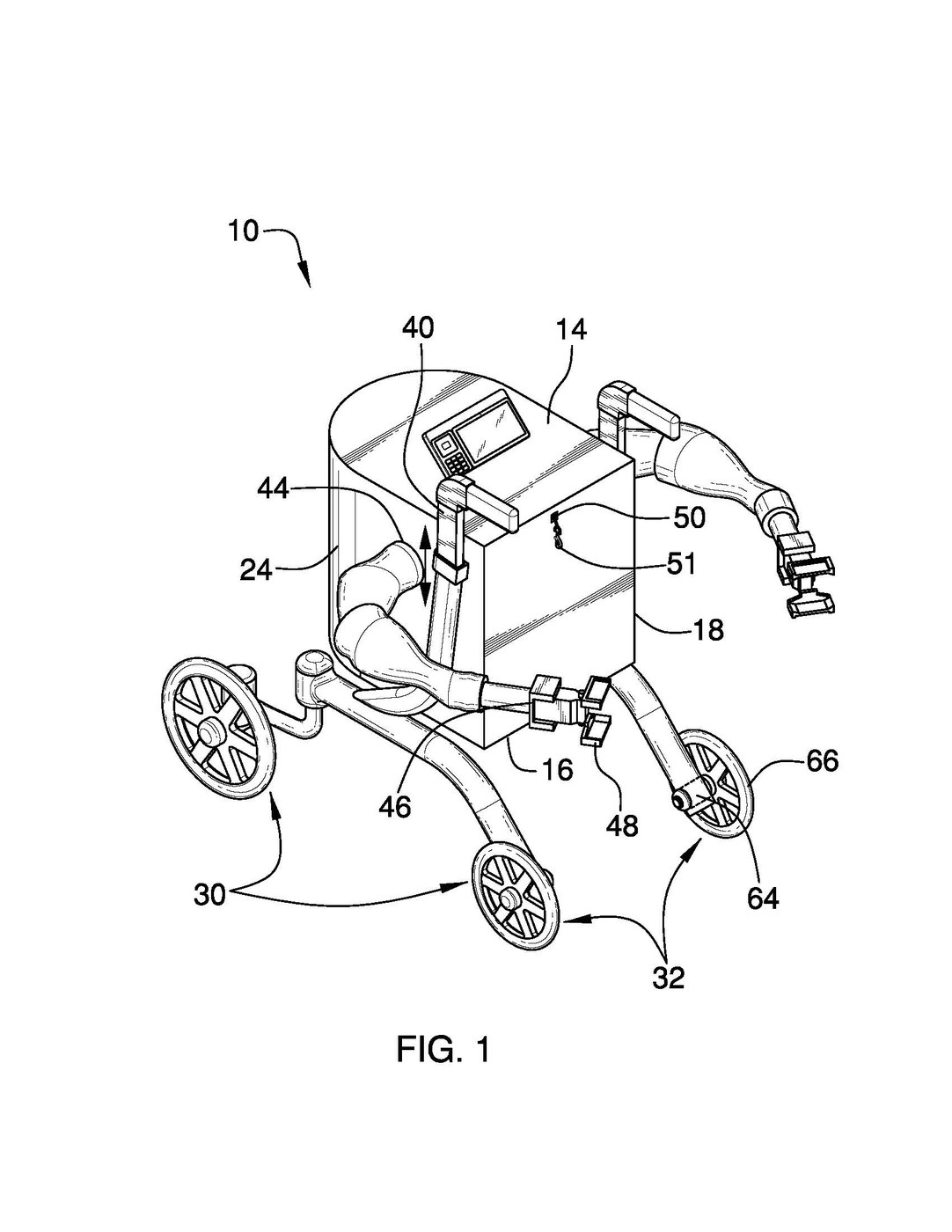
An automated walker assembly, granted in April 2021: a machine to help a person stand and take a step in their own hallway, not in a gym with a rail on either side.

We named it ROSE, after Michael's mother, an Air Force nurse who went on to give 33 years to the VA. She spent her working life helping people stand up again.

The drawings

ROSE, as the patent office received her.

Patent drawing, figure 1: a four wheeled walker with a powered arm, a small control screen on the housing and a grip handle for the user.
Fig. 1, the assembly
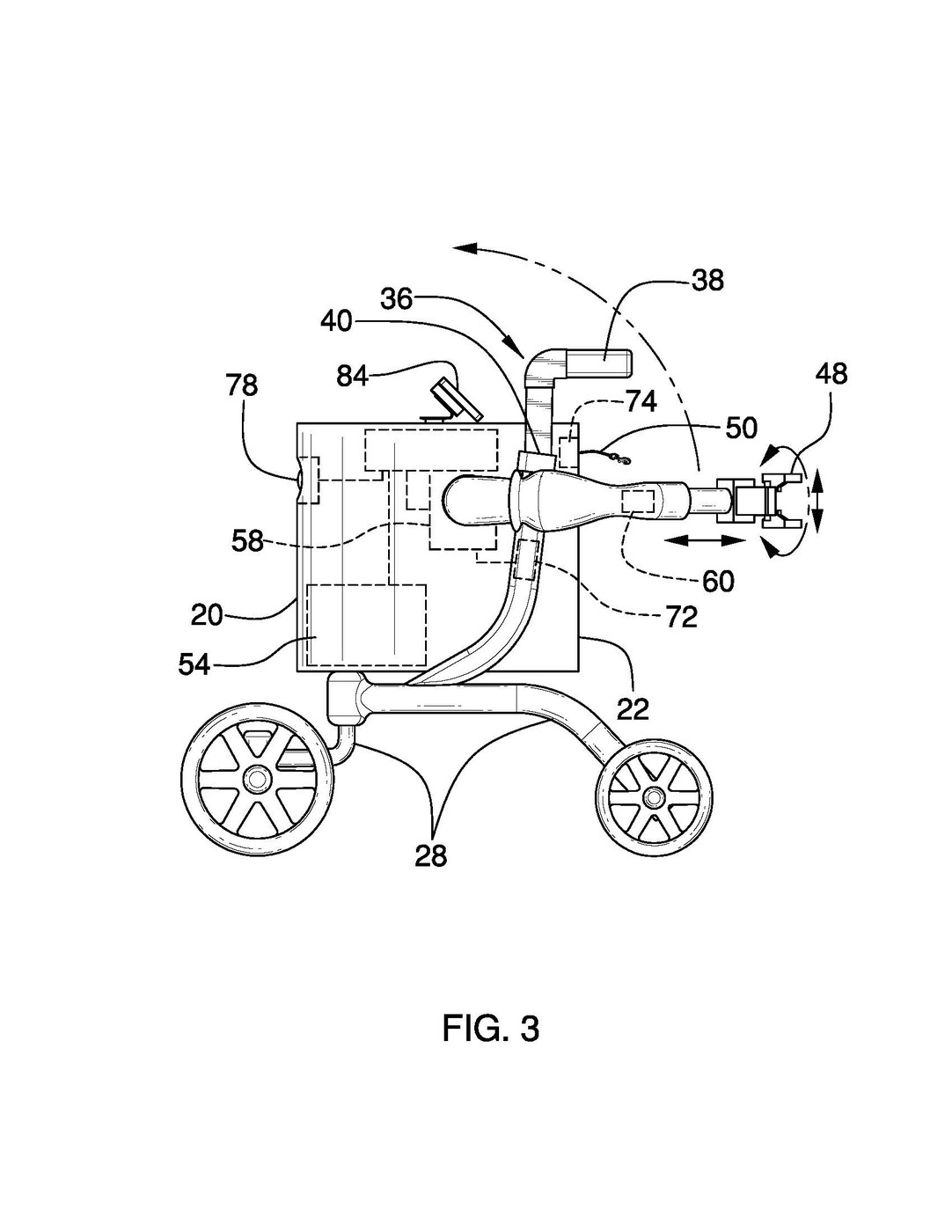
Patent drawing, figure 3: the same walker seen from the side, showing the arm's range of movement and the internal housing.
Fig. 3, the arm in motion

The idea underneath it is simple. If a person can stand and take one step, a great deal of the rest of their life becomes possible again.

Three continents

Four people reached the same conclusion separately

Michael in Sioux Falls, from the caregiving side. Maja Rudinac, who built certified robots out of Delft and now works from Switzerland, from research and engineering. Zen Koh, from twenty years of putting rehabilitation robots into hospitals across Asia Pacific. Clay Pavlis, a physician and a veteran, from watching what happens to people after the appointment ends.

Each of them worked out that the home is where recovery is decided, and that the home has almost nothing in it. Then they found each other.

Cambridge, Massachusetts

A time machine in the corridor.

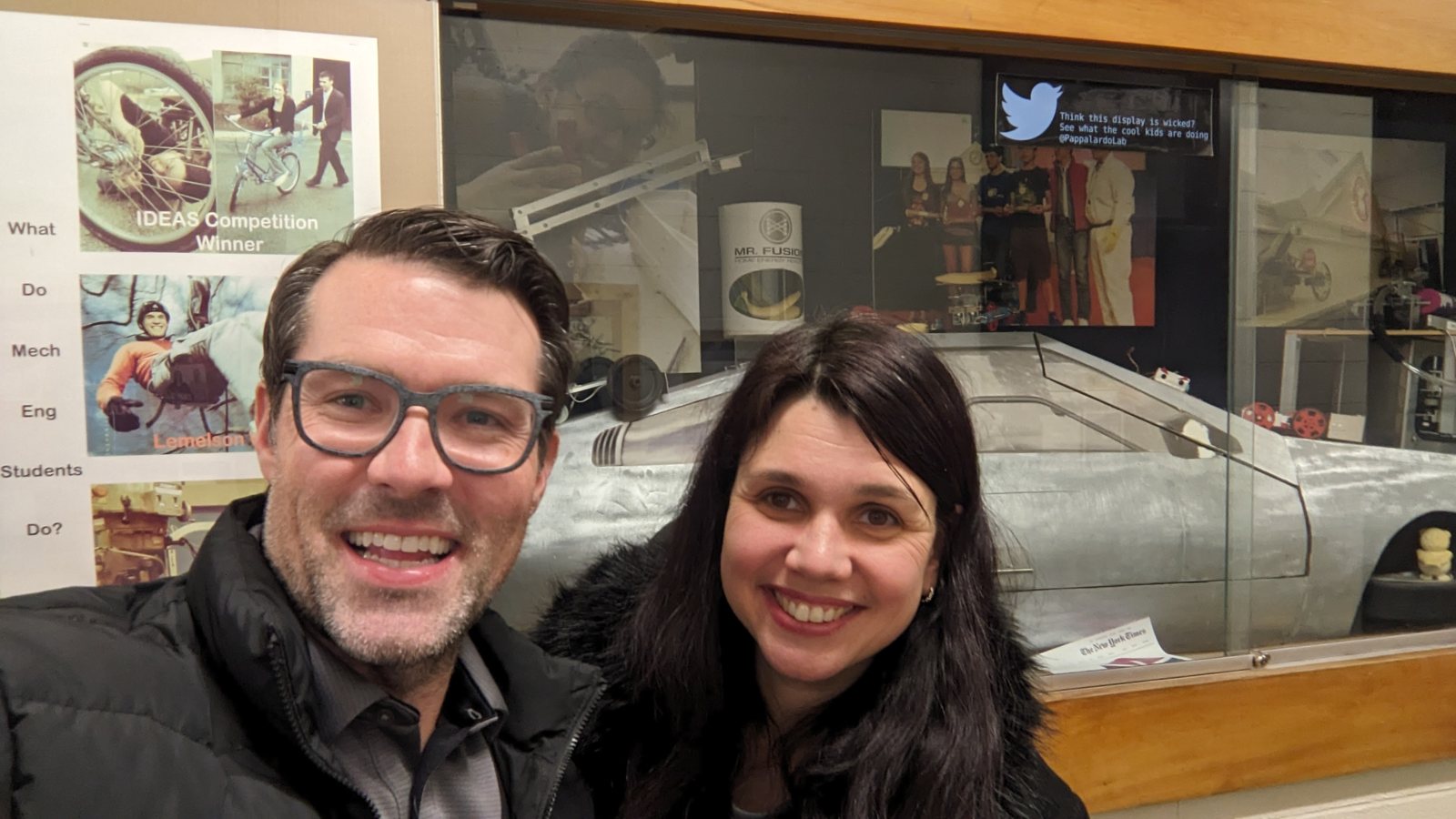
Michael Bankowski and Maja Rudinac standing in a corridor at the MIT Newman Lab, in front of a glass display case holding a partly built, bare metal DeLorean and a Mr. Fusion canister.
Michael and Maja at the MIT Newman Lab, where much of the original science of robotic gait training was done. Behind the glass is a student-built DeLorean, Mr. Fusion and all. Michael asked for this photograph by name, on the grounds that Back to the Future is the best film ever made and any lab keeping a time machine in the hallway is a lab worth working with.

Why we do it in this order

One person getting better is never just one person getting better.

  1. Heal a veteran.
  2. The family heals with them, because the family was carrying it too.
  3. A steady family steadies the street it lives on.
  4. And that community reaches the next veteran faster than we ever could from here.

When we serve the community, the community serves us. That is why we start with veterans.

June 2026

Certified, and available to download

Prosperous Healthcare LLC was certified SDVOSB by the SBA in 2026. It is the entity that carries federal contracting. Prosperous Robotics Group, Inc. is not SDVOSB certified.

Heroes.AI went live on the App Store in June 2026. That is a distribution milestone, not a regulatory clearance.

Today

What actually exists

  • Heroes.AI, which brings physical, occupational, speech and mental health therapy together in one adaptive platform for the home.
  • Heroes Exoskeleton, for walking and balance. In research and prototyping, market entry planned for 2027.
  • HandVivante, which holds an FDA 510(k) and is manufactured by Robotimize. Prosperous is the US distributor and the transfer is in process.
  • Heroes Care, for caregivers, in development.

Alongside

The work that sits around the work

We research with the Harvard Move Lab, the Wyss Institute, Harvard Medical, Spaulding, the MIT Newman Lab and Yale, and at home with USD, SDSU, DSU and SD Mines.

We own the software stack. Hardware runs through a partnership and distribution agreement with Robotimize covering Singapore and Malaysia, which Zen manages from the region. FedRAMP 20x Low and SOC 2 are underway, not finished. MotusAcademy Foundation, our nonprofit, does the part of this work that was never going to pay for itself.

Sioux Falls

Some of it looks like robotics. Most of it looks like a parking lot.

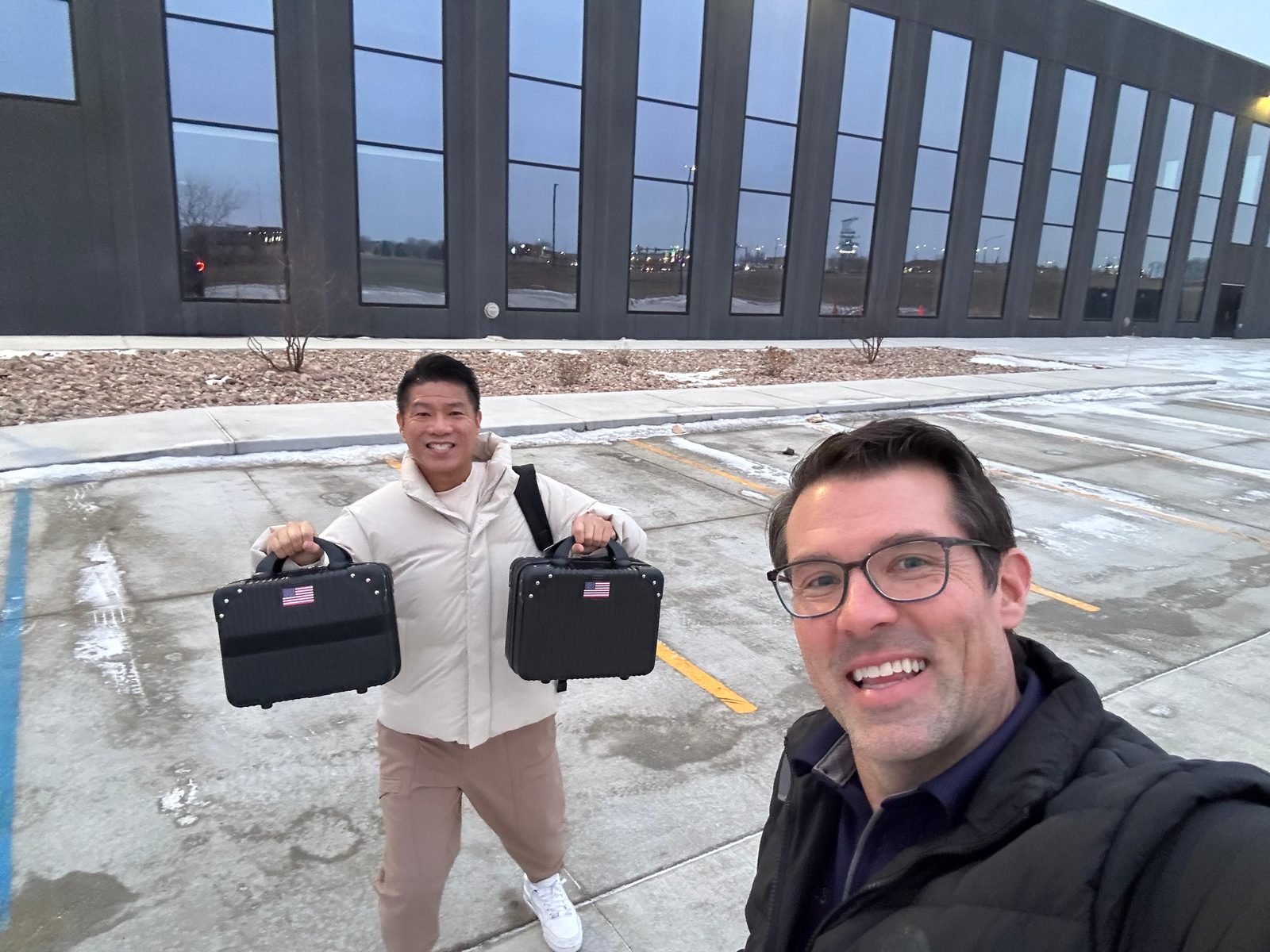
Zen Koh standing in a snowy parking lot outside the Discovery District building at dusk, holding up two black hard sided device cases, each marked with a small United States flag.
Zen with two of the first devices to arrive, opened in the parking lot at dusk because neither of us wanted to wait.
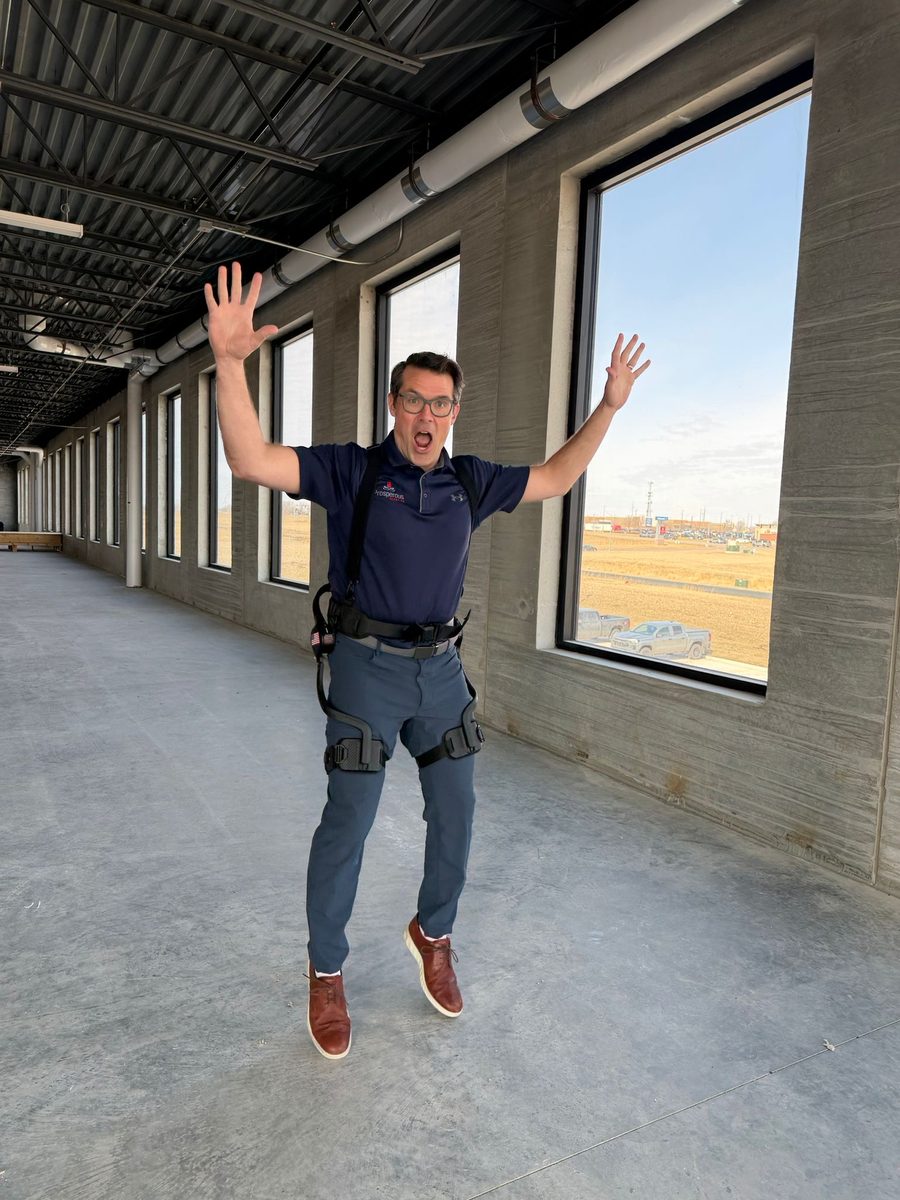
Michael Bankowski jumping with both arms raised inside a long, unfinished concrete floor with exposed ceiling ducts and tall windows looking out onto open prairie. He is wearing a hip exoskeleton over his clothes.
The same building before the fit-out, with a hip unit being tested on the bare floor. The view is prairie, which is most of the view here.
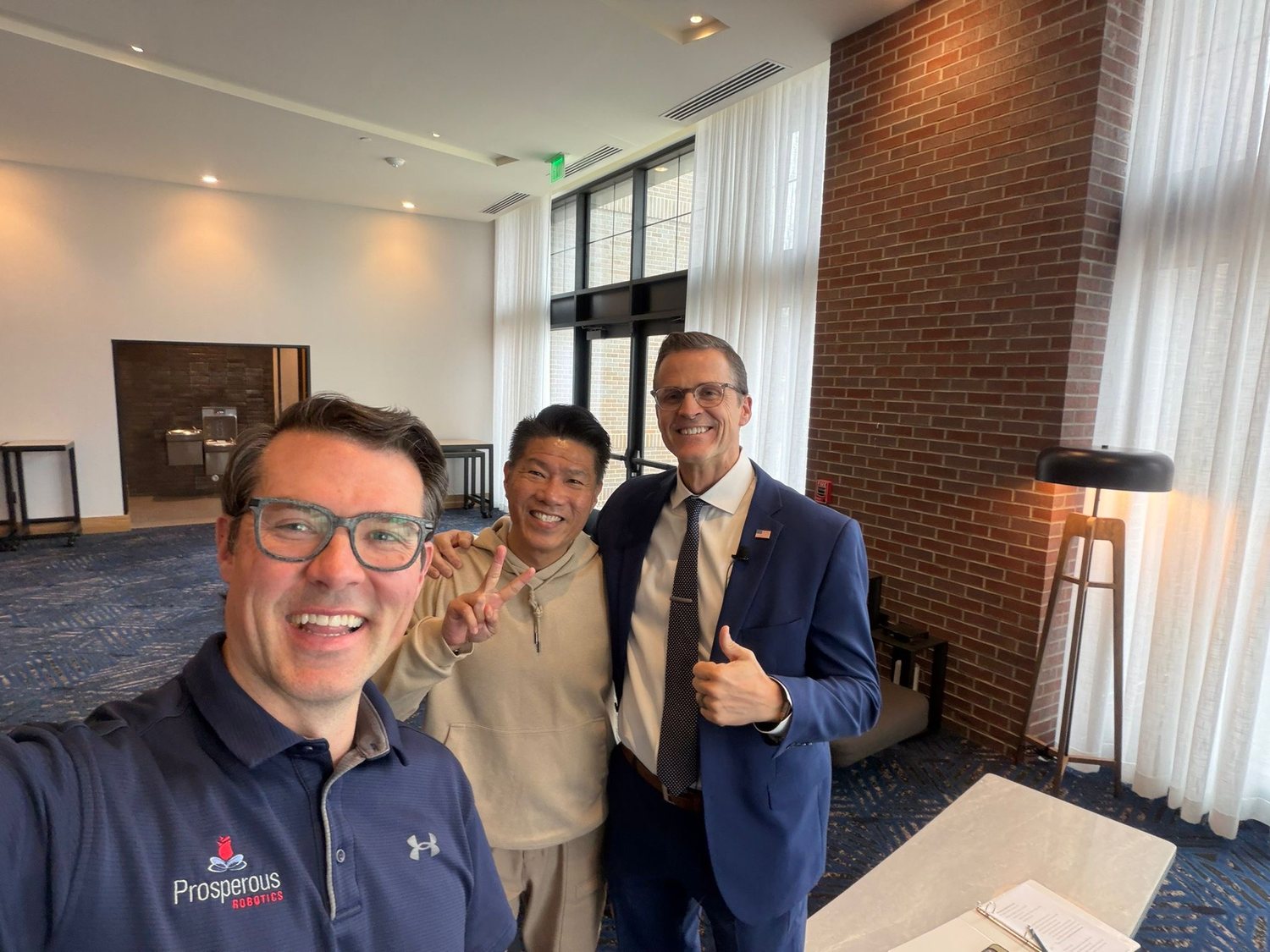
Michael Bankowski, Zen Koh and the former mayor of Sioux Falls standing together in a meeting room, all three smiling at the camera.
Zen and Michael with the former mayor of Sioux Falls.

The team

Who is answerable for what.

  1. 01

    Michael Bankowski

    Co-Founder, President and Chief Executive.

    Sioux Falls, South Dakota

    Michael comes from a family of caregivers. His mother gave 33 years to the VA as a nurse and his father was a recreational therapist there, so he grew up a VA baby. He started caregiving at eleven, and nobody seemed surprised.

    He served in Air Force Security Forces and is a service-disabled veteran. Since then he has been a nursing home administrator, owned a home care agency for more than a decade, and put in over 10,000 hours of hands-on caregiving. He was CEO of LiteRun, holds US Patent 10,966,897 B2 for ROSE, and with Spencer Wolf wrote the federal report language on veteran mobility. He has worked alongside researchers at MIT and Harvard.

    He married his high school sweetheart, which he calls the best decision he ever made. He loves dogs, Labradors above all, and will show you pictures whether you ask or not.

    “Caregivers are the invisible backbone of healthcare. They show up every day, often without a thank you, often without a break.”

    Answerable for The company and everything it promises, the veterans work, and making sure nothing we say gets ahead of what we can show.

  2. 02

    Dr. Maja Rudinac

    Co-Founder, Research and Development.

    Switzerland

    PhD in AI and Robotics from TU Delft, and twenty years building robotics companies in Europe, the United States and Japan. As founder and CEO of Robot Care Systems she created LEA, a certified robotic walker with full insurance reimbursement, tested in more than a thousand patient trials and used in over thirty rehabilitation centers worldwide, across Europe and the Middle East.

    In 2019 she received the Prince Friso Engineering Prize, the Netherlands’ highest engineering honor, as Engineer of the Year. She also holds a Red Dot award and has more than 50 peer-reviewed publications.

    Heroes.AI is hers. She has led it from the first sketch: the architecture, the research underneath it and the team building it. She built the walker a decade ago and has argued since that the machine is only half the answer. The other half is software that learns the person using it, and Heroes.AI is that half.

    Answerable for Research and development, and Heroes.AI. What the technology can do today, and what it cannot do yet.

  3. 03

    Zen Koh

    Co-Founder, APAC and international operations.

    Singapore and Switzerland

    Co-Founder and former Global CEO of Fourier Intelligence, which he helped build to a presence in 57 countries, seventeen joint research labs and more than $100 million raised, including from Saudi Aramco Prosperity7 Ventures and SoftBank Vision Fund 2. Before that he led Hocoma’s Asia-Pacific business as Managing Director of its Singapore hub, developing the regional market from 2010.

    He founded MotusAcademy in Switzerland, a nonprofit society that convenes clinicians, engineers and researchers worldwide, and is Managing Editor of its peer-reviewed Journal of Rehabilitation Methods and Technologies, published with Emerald. He is President of IISART, chaired RehabWeek 2023, was named to MD+DI’s 40 Under 40, and was a research fellow at the National University of Singapore.

    “Rehabilitation robotics is not about the device with the prettiest gait. It is about building the clinical permission stack to treat at scale.”

    Answerable for Asia Pacific and international operations: the company outside the United States, and the partners who build and move what we ship.

  4. 04

    Dr. Clay Pavlis, MD

    Co-Founder, Chief Medical Director.

    Sioux Falls, South Dakota

    Board-certified psychiatrist (American Board of Psychiatry and Neurology) with more than fifteen years treating complex psychiatric illness across the lifespan. MD from the University of South Dakota School of Medicine. Founder of MWI Health, a multi-state mental health practice focused on veterans and on rural and underserved communities in South Dakota and Minnesota, including extensive VA evaluation work.

    A veteran himself, and the reason veterans’ mental health and quality of life lead every clinical conversation we have.

    Answerable for Clinical direction. What we will and will not claim, and whether any of this makes a real difference to the person living with it.

  5. 05

    Spencer Wolf

    Director of Government Affairs.

    Minnesota and Washington, DC

    Fifteen years in legislative relations and policy advocacy, on both sides of the table. He started his career in the legislative office of Senator Kent Conrad (ND) on Capitol Hill, served as Vice President at The Daschle Group and as a policy advisor at Baker Donelson, and now runs Wolf Strategies, a government affairs practice focused on defense technology, healthcare robotics and veterans’ policy. Named one of The Hill’s Top Lobbyists, he holds a Master of Policy Management from Georgetown.

    The company’s government affairs strategy and execution start and end with Spencer, through his experience and bipartisan relationships. With Michael, he wrote the congressional report language behind our veterans’ mobility work, which directs VA to look at a mobility walker pilot for state veterans’ homes. It was enacted in the FY26 MilCon-VA and Labor-HHS reports and carried into FY27 committee report language, which is not yet enacted.

    “Report language is a starting point, not a finish line. The work is getting a department to act on what Congress asked for.”

    Answerable for The federal work. Getting language written, getting it kept, and turning congressional direction into something a department will actually act on.

English 日本語 한국어 简体中文 Polski